AI Voice Agent for Lead Qualification
See how an ai voice agent for lead qualification helps teams call faster, capture buying signals, and route leads with more control.
See how an ai voice agent for lead qualification helps teams call faster, capture buying signals, and route leads with more control.
The first five minutes after a lead comes in often decide whether your team gets a real conversation or chases a dead number three days later. That is where an ai voice agent for lead qualification earns its place. Not as a gimmick, and not as a replacement for closers, but as a system for making sure every lead gets contacted, assessed, and moved to the right next step.
For sales teams handling inbound spikes, dormant databases, or long outbound lists, the problem usually is not lead volume alone. It is operational follow-through. Reps cannot call every record immediately. Notes get entered differently from person to person. Managers see activity, but not always clear outcomes. Over time, speed-to-lead slips, follow-up quality becomes uneven, and strong opportunities blend in with bad fits.
An AI voice agent changes that when it is built around process. It calls quickly, asks the right questions in the right order, captures answers in a structured format, and routes the result based on rules your team can review. No manual dialing. No vague call notes. No wondering which leads were actually worked.
What an AI voice agent for lead qualification actually does
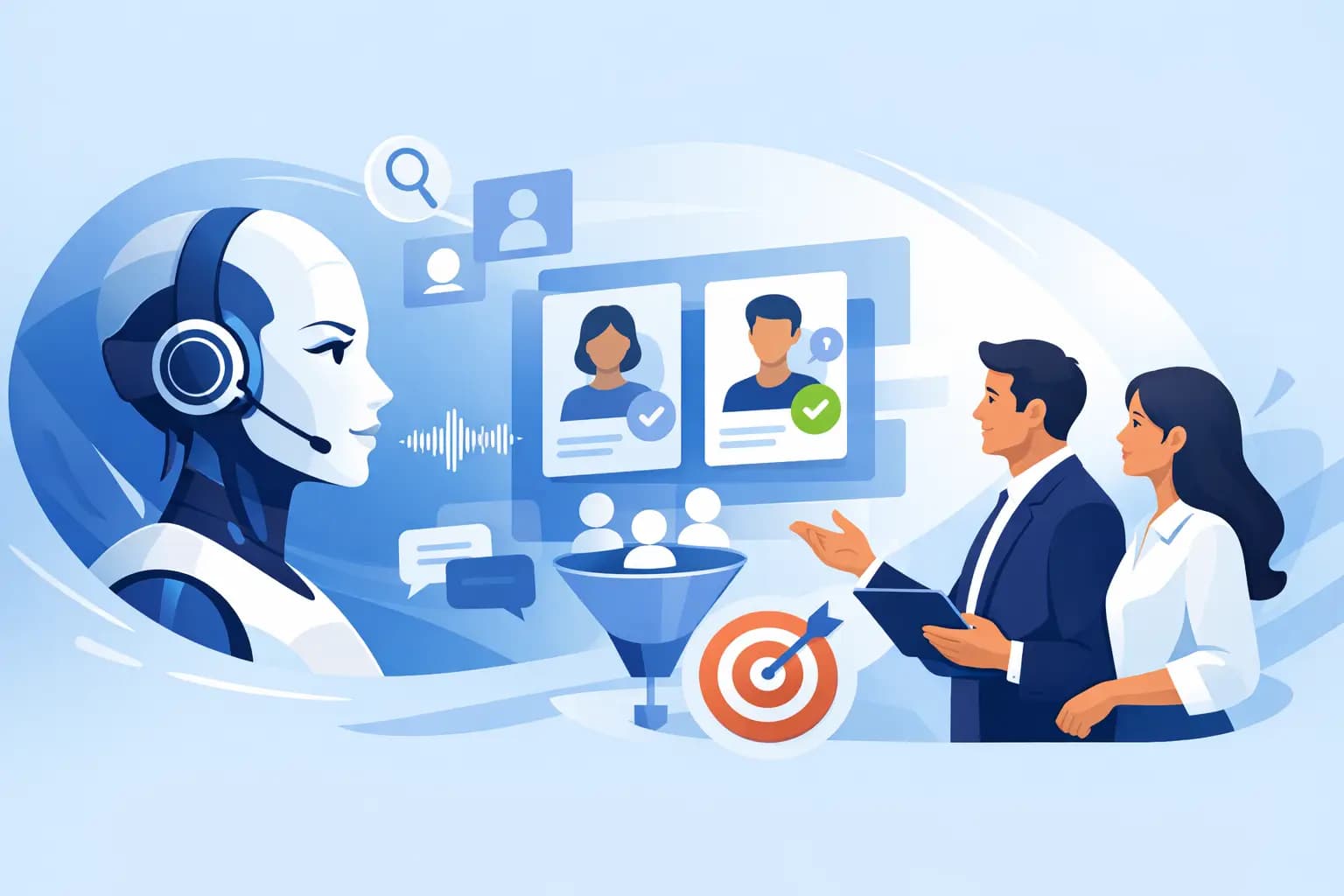
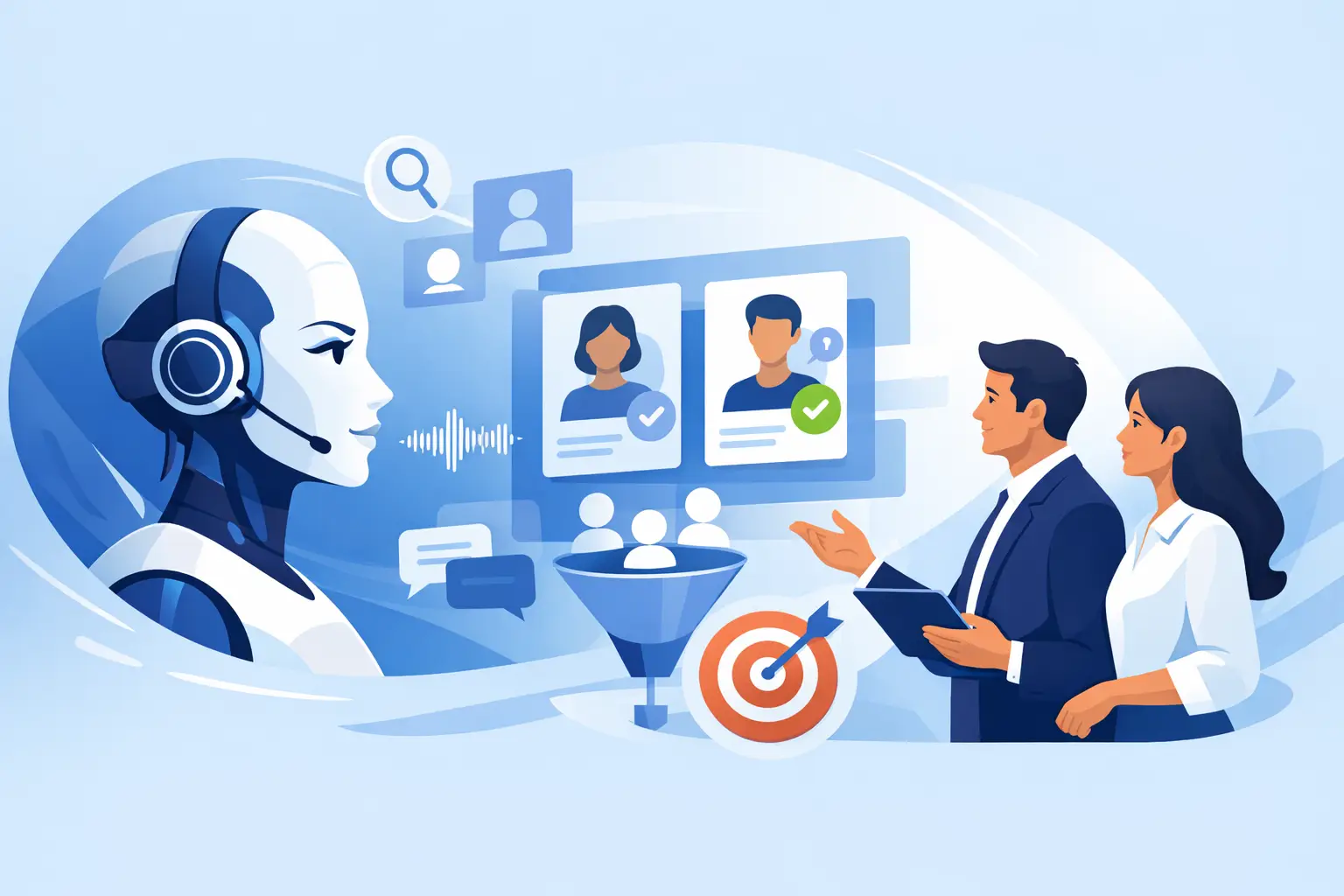
At a practical level, this type of system handles the front end of lead triage by phone. It places or answers calls, verifies intent, asks qualification questions, identifies buying signals, and records the outcome. The important distinction is that it should do more than generate a transcript. It should produce operationally useful outputs.
That means the conversation becomes a set of clear fields and actions. Is the lead reachable? Are they still interested? Are they a buyer or seller? Are they prequalified, early stage, or unresponsive? Should they be routed to a rep now, placed into a nurture flow, flagged for review, or suppressed from future outreach?
For real estate, mortgage, and similar lead-heavy businesses, that structure matters more than novelty. Teams do not need an AI that sounds clever. They need one that can work a queue consistently and leave behind evidence the team can act on.
Why phone qualification breaks down in growing teams
Most lead qualification problems are workflow problems wearing a sales costume. A team starts with good intentions. Reps are told to call fast, ask a standard set of questions, and log outcomes. Then volume rises.
One rep calls right away. Another waits until after lunch. One marks a lead as warm with no detail. Another writes a full paragraph that no one reads. A third forgets to update the CRM at all. Management gets a pipeline report that looks full, but the actual next steps are scattered across memory, call recordings, and incomplete notes.
This is why lead qualification is hard to scale manually. The issue is not whether a human can have a better conversation. Of course they can, especially on nuanced or high-stakes calls. The issue is whether every lead receives the same baseline attention, the same core qualification path, and the same clean handoff. Usually, the answer is no.
An AI voice agent fixes the repetitive part of that problem. It does not replace skilled sales judgment. It creates a reliable first layer so human time goes where it has the most value.
Where an AI voice agent for lead qualification performs best
The strongest use cases are the ones with clear decision points. Inbound lead response is an obvious example. If someone fills out a form or requests contact, a voice agent can call quickly, confirm interest, gather the basics, and route hot leads for immediate follow-up.
A second strong use case is dormant lead reactivation. Teams often sit on months of old inquiries that may still have value but are too time-consuming to work manually. A voice agent can move through that list, identify renewed intent, and separate true opportunities from records that should not consume rep time.
Seller qualification, borrower screening, appointment confirmation, and first-pass discovery also fit well. In each case, the goal is not to close the entire deal on an automated call. The goal is to turn unworked or inconsistently worked leads into categorized outcomes with next actions attached.
Where this approach is less effective is in conversations that require complex negotiation, heavy emotional nuance, or advisory depth from the first minute. If the lead journey starts with education, objection handling, and relationship-building, a voice agent should support that motion, not pretend to be the whole process.
What good implementation looks like
A useful deployment starts with one lead journey, not ten. Pick a workflow that already has repeatable logic. That could be inbound buyer qualification, seller intake, or reactivation of old web leads. Define the key questions, the qualification thresholds, and the possible outcomes.
Then focus on the operational outputs. What must happen after the call? A qualified lead might need immediate routing to a licensed rep. A low-intent lead might need a nurture tag and a future follow-up date. A disconnected number might trigger a different channel. A do-not-contact request must be enforced without exception.
This is where many teams make a bad buying decision. They evaluate the conversation quality and ignore the process controls. A polished voice means little if the system cannot show why a lead was routed, what logic was used, or which calls need human review.
The better model is controlled automation. Use draft mode before going live. Review call transcripts and recordings. Check whether outcomes match your qualification standards. Keep a human review queue for edge cases. Make sure suppression rules, compliance settings, and escalation paths are visible to your operators, not hidden in a black box.
For that reason, the best platforms are not just call tools. They are workflow systems with auditable logic.
What to look for in an AI voice agent platform
Start with speed and reliability, but do not stop there. Fast calling only helps if the results are usable. The system should capture structured data from each conversation, not just freeform text. It should make outcomes consistent enough that managers can trust the reporting and reps can trust the handoff.
You also want clear reviewability. Can your team see transcripts, recordings, detected signals, and assigned outcomes? Can managers inspect why the system made a routing decision? Can uncertain calls be pulled into human review before they affect the pipeline?
Launch speed matters too, especially for lean teams. Ready-made playbooks can dramatically reduce setup friction because they give you tested call logic for common lead journeys instead of forcing you to design everything from scratch.
And then there is governance. This is the part serious operators care about. Compliance settings, do-not-contact enforcement, draft testing, visible logic, and controlled routing are not extras. They are requirements if you are putting a voice system into revenue operations.
That is the difference between experimentation and production use. Built for control, not black-box automation, is the standard that matters.
The business case is usually simpler than it sounds
Most teams do not need a sweeping AI transformation story. They need fewer leads going cold, better use of rep time, and cleaner qualification data. If a voice agent can contact leads faster, identify which ones deserve immediate attention, and document every outcome in a consistent way, the return becomes easy to see.
Reps spend less time dialing through bad-fit or unreachable records. Managers get clearer visibility into funnel health. Operations teams stop piecing together what happened after the fact. Even when conversion lift varies by use case, the efficiency gains alone can justify the change.
That said, expectations should stay realistic. An AI voice agent will not rescue a broken offer, a weak lead source, or a confused qualification process. It amplifies operational discipline. If your team does not know what qualifies a lead, automation will expose that problem quickly.
This is why companies like DialoGrove focus on structured workflows rather than vague AI promises. The value comes from turning conversations into auditable actions your team can trust.
If your pipeline depends on phone qualification, the question is not whether automation can place calls. It can. The real question is whether your current process gives every lead a fair, fast, and measurable path forward. If the answer is no, that is where an AI voice agent becomes less of a technology purchase and more of an operating upgrade.