How AI Agents Qualify Leads at Scale
How AI agents qualify leads by reducing response time, applying consistent logic to every call, and turning conversations into structured outcomes teams can act on.
A lead comes in at 4:12 PM. By 4:20, your team is already behind.
That gap is where revenue leaks. Reps are still finishing other calls, inbound forms are piling up, and older leads sit untouched because no one has time to work the full list. If you want to understand how AI agents qualify leads, start there: they reduce the delay between lead creation and lead contact, then turn every conversation into a usable outcome instead of another vague CRM note.
For teams that rely on phone-based qualification, speed matters. Consistency matters too. But neither helps much if the process turns into black-box automation that no one can review or trust. The real value of AI lead qualification is not just that more calls get made. It is that calls follow a defined path, capture the right signals, and route the next action clearly.
How AI agents qualify leads in practice
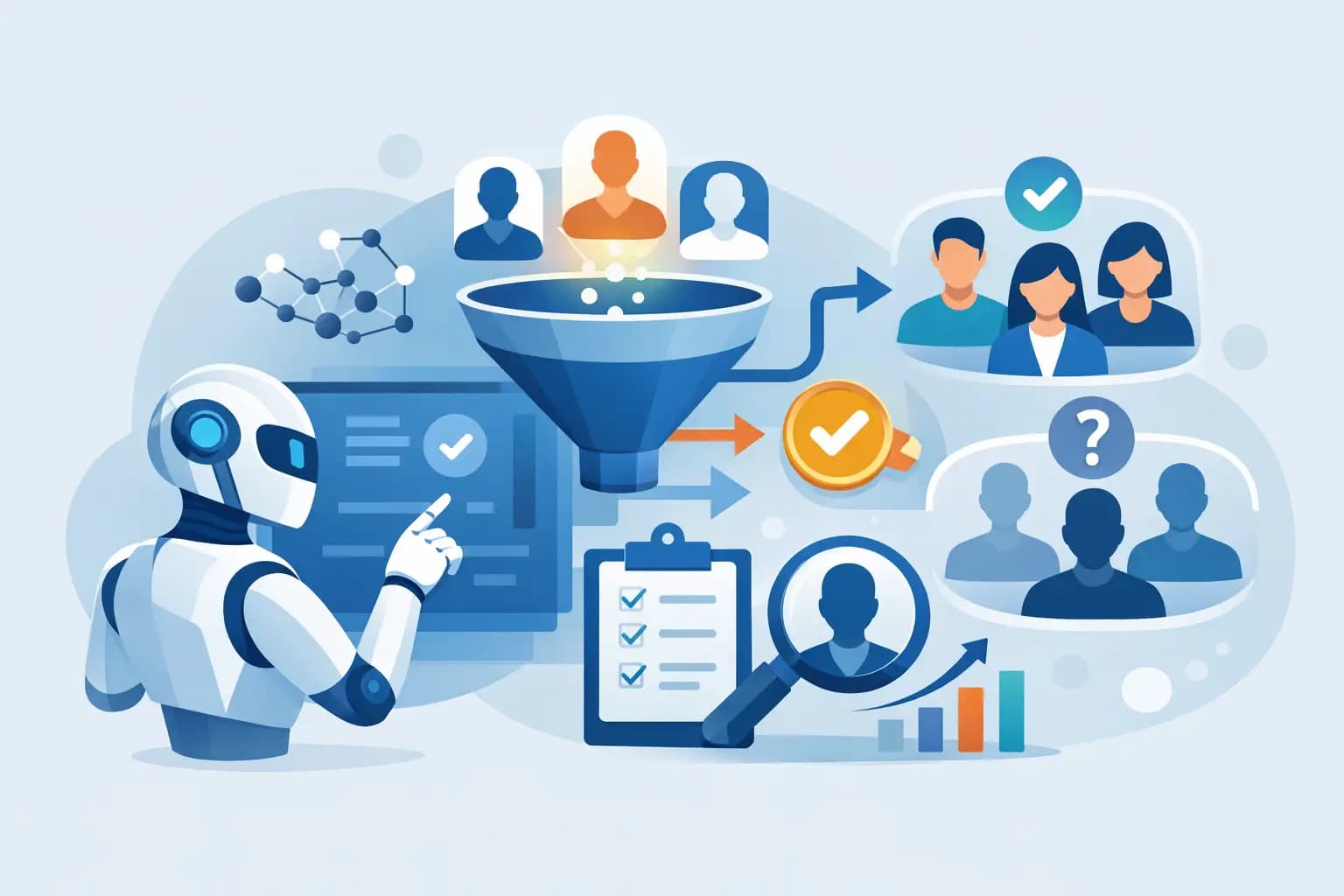
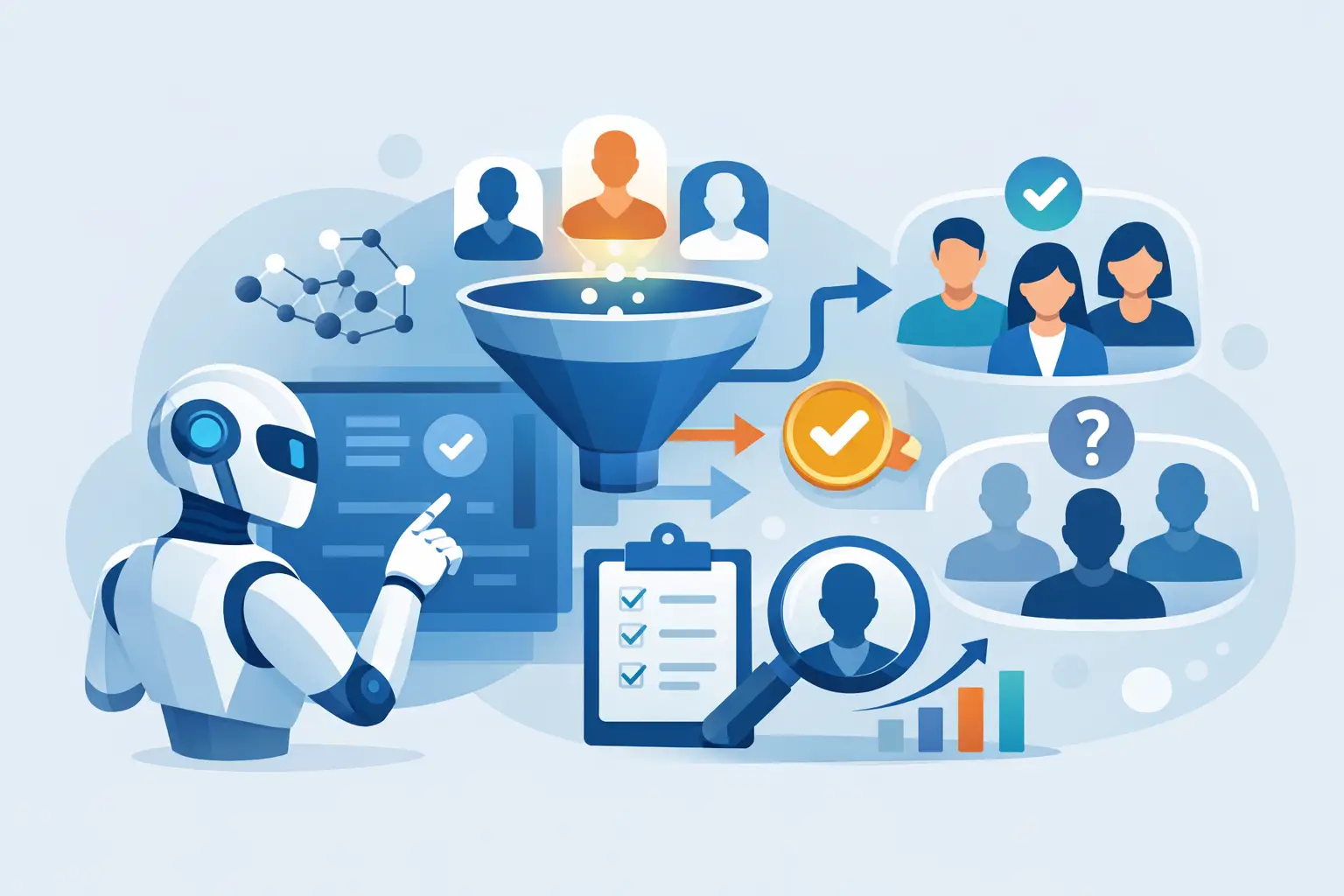
An AI agent qualifies leads by running a structured conversation against a goal. That goal might be confirming contact details, checking intent, identifying timeline, scoring fit, or routing the person to a rep, a nurture sequence, or a do-not-contact status.
In practice, the process is operational, not magical. A lead enters a workflow. The AI agent places or receives a call, asks pre-set qualification questions, listens for relevant details, and records the answers in a format the business can actually use. Instead of freeform notes like "seems interested" or "call back later," the result is a transcript, a recording, captured data points, and a tagged outcome tied to clear next steps.
That structure is what makes the system useful to sales and operations teams. It is also what separates lead qualification from simple call automation. A dialer can place calls. A qualification workflow has to decide what happened, what matters, and what should happen next.
The qualification logic matters more than the voice
Many teams first focus on whether the AI sounds natural. That matters, but it is not the main question. The bigger issue is whether the agent follows a qualification path your business can control.
A strong lead qualification workflow usually includes a few core checks. Is this the right person? Are they still in market? Does the lead match your service area, budget range, or timing requirements? Do they want a callback, an appointment, or no further contact? The AI agent needs to move through these checkpoints in a way that is repeatable and visible.
For example, a real estate team might want to know whether a seller still plans to list, when they expect to move, and whether they already have an agent. A mortgage team might prioritize current homeownership status, refinance interest, credit-related constraints, or preferred contact timing. The questions differ by use case, but the pattern is the same: collect signals, assign an outcome, and route cleanly.
This is why operational control matters. If the qualification logic is hidden, you cannot verify what the agent asked, why it assigned a result, or whether the workflow fits your process. Teams need draft mode testing, visible review logic, and clear guardrails before they trust automation to touch revenue-generating leads.
What good AI lead qualification actually produces
The most practical answer to how AI agents qualify leads is this: they produce structured outputs that a team can act on.
A useful system does more than complete a conversation. It should leave behind evidence and decisions. That includes the call transcript, the audio recording, identified buying signals, the qualification status, and the next action. If the lead is sales-ready, the system can route it to a rep or queue a transfer. If the lead is not ready, it can schedule a follow-up path without clogging the active pipeline. If the lead should not be contacted again, that status should be enforced immediately.
This matters because sales teams do not need more activity for its own sake. They need less ambiguity. A rep should open the record and know what happened on the call, what the lead said, and whether the conversation moved the deal forward.
That is where AI can improve process quality, not just volume. It standardizes first-touch qualification and gives managers something measurable to review. Instead of asking whether reps are "working leads," they can look at contact rates, completion rates, qualified outcomes, disqualifications, callback reasons, and response patterns across the workflow.
Where AI agents work best
AI agents are especially effective in high-volume lead environments where phone qualification is necessary but hard to staff consistently.
Inbound lead response is one clear fit. When a prospect fills out a form, timing shapes conversion. An AI agent can call immediately, confirm intent, gather key details, and pass the lead to a human rep while the interest is still fresh.
Dormant lead reactivation is another. Most teams have old lists that still contain opportunity, but not enough rep capacity to call every record. AI agents can work those lists methodically, identify people who are back in market, and separate live opportunity from dead weight.
They also fit outbound qualification when the goal is to verify interest before human follow-up. This is useful when sales teams are spending too much time dialing low-fit or low-intent contacts.
The pattern is simple: AI is strongest where the first call follows a repeatable path and where the business benefits from consistent outcomes across a large number of leads.
Where it depends
Not every qualification process should be fully automated. Some lead journeys are straightforward. Others need judgment early.
If the conversation requires heavy objection handling, complex pricing discussion, or nuanced advisory input, an AI agent may be better as a front-end screener than a full-cycle qualifier. It can still confirm basics, collect intent signals, and tee up the rep with context. But forcing automation too far can hurt conversion and trust.
Compliance also matters. Calling workflows need clear rules around consent, calling windows, do-not-contact enforcement, and reviewability. For regulated or high-sensitivity use cases, governance is not a nice-to-have. It is part of the buying decision.
The same goes for escalation. Good systems know when not to keep pushing. If a caller is confused, frustrated, or asks for a human, the workflow should route appropriately. Control is not the opposite of automation. It is what makes automation viable in production.
How to evaluate whether an AI agent can qualify leads well
If you are comparing platforms or considering rollout, do not stop at demos that show a polished conversation. Evaluate the workflow around the call.
First, look at how qualification criteria are defined. Can your team set the logic clearly, or do you have to rely on a vendor to interpret your process? Second, inspect the outputs. Are outcomes structured enough for routing, reporting, and CRM hygiene? Third, review the control layer. Can calls be tested before launch? Can managers review transcripts, recordings, and edge cases? Can you enforce do-not-contact rules and compliance guardrails reliably?
You should also ask how quickly a team can go live. In theory, custom AI call flows can do almost anything. In reality, most businesses need something proven enough to launch quickly and controlled enough to trust. Ready-made playbooks often beat blank-page flexibility because they reduce implementation drag without sacrificing operational visibility.
That is the practical appeal of platforms such as DialoGrove. The goal is not to replace sales teams with an opaque system. It is to automate repetitive qualification work inside an auditable workflow that keeps records, outcomes, and next actions visible.
The real business case
When people ask how AI agents qualify leads, they are often really asking whether the system will create pipeline or just create more software.
The answer depends on whether it improves the handoff between lead generation and human selling. If AI shortens response time, applies the same qualification standard to every call, and gives reps cleaner context, it reduces wasted follow-up time and helps teams focus on live opportunity. If it only adds another layer of unclear automation, it creates friction.
The teams that benefit most tend to think operationally. They do not treat AI as a novelty. They use it to cover missed calls, revive cold lists, enforce process consistency, and turn conversations into records that can be reviewed and acted on.
That is the shift worth paying attention to. Lead qualification stops being a race to make enough dials and becomes a controlled system for deciding which conversations deserve human time next.
If your pipeline has more leads than your team can call well, that is not just a staffing issue. It is a workflow problem, and the right AI agent can solve it without asking you to give up visibility.