Call Routing After Qualification That Works
How call routing after qualification turns conversations into clear next steps with structured outcomes, assignment rules, and visible handoffs.
A lead picks up, answers the right questions, shows real intent - and then gets stuck waiting for the next person to notice. That gap is where a lot of pipeline value disappears. Call routing after qualification matters because the handoff is not a minor admin step. It is the moment where speed, context and accountability either stay intact or fall apart.
For sales and service teams that rely on phone conversations, qualification is only half the job. Once a caller has been assessed, someone still needs to decide what happens next, who owns it, and how quickly that action should occur. If that routing logic is vague, manual or inconsistent, good conversations turn into slow follow-up, weak notes and missed opportunities.
What call routing after qualification actually means
Call routing after qualification is the process of sending a lead, caller or customer to the right next path once enough information has been captured. That path might be a sales rep, a specialist team, a booking workflow, a review queue or a follow-up sequence. The point is not just to move the lead somewhere. It is to move them based on what the conversation actually revealed.
That sounds straightforward, but in practice many businesses still route based on round-robin rules, inbox triage or whoever happens to be available. Those methods are easy to set up, but they often ignore the most useful part of the interaction - the qualification outcome itself.
A better routing model uses structured inputs from the call. Budget range, timing, intent, service area, job type, readiness to book, previous engagement, preferred location or urgency can all shape the next action. Routing becomes an operational decision, not just a distribution rule.
Why the handoff is where workflows usually break
Most teams spend time improving scripts, response times and lead capture forms. Fewer spend the same effort on post-call movement. That is why call routing after qualification often becomes the weakest part of the workflow.
The first problem is delay. If a qualified lead sits in a CRM waiting for manual review, the value of a fast initial response starts to fade. In high-intent categories such as property, finance or appointment-based services, the time between qualification and next action can directly affect conversion.
The second problem is loss of context. A rep receives a task saying "hot lead" with two vague notes, then has to repeat questions the customer already answered. That creates friction for both sides. Customers notice when a business does not seem to remember the conversation it just had.
The third problem is inconsistency. One operator routes cautious but interested leads to a nurture queue. Another sends similar leads straight to sales. A third forgets to assign them at all. Without clear routing criteria, outcomes depend too much on individual judgement.
Good routing starts with structured qualification
You cannot route well if qualification is loose. Free-text notes and general impressions do not create reliable downstream actions. The better approach is to define what the call needs to capture and which outcomes those answers should trigger.
That means deciding upfront which fields matter. For one business, that might be timeframe, property type and borrowing stage. For another, it could be service need, location, budget and appointment preference. The exact fields vary, but the principle stays the same: capture information in a way that can be acted on consistently.
This is where many teams overcomplicate things. They try to capture everything, then end up with bloated call flows that gather too much noise. In most cases, routing improves when qualification focuses on the minimum useful data needed to make a sound next-step decision.
What effective call routing after qualification looks like
The strongest workflows are clear enough to run consistently and flexible enough to reflect real customer differences. They do not treat every "qualified" lead the same.
A high-intent inbound prospect who wants a call back today should not follow the same path as someone who is only comparing options for next quarter. Both may be legitimate leads, but the urgency, ownership and follow-up style should differ. Routing should reflect that reality.
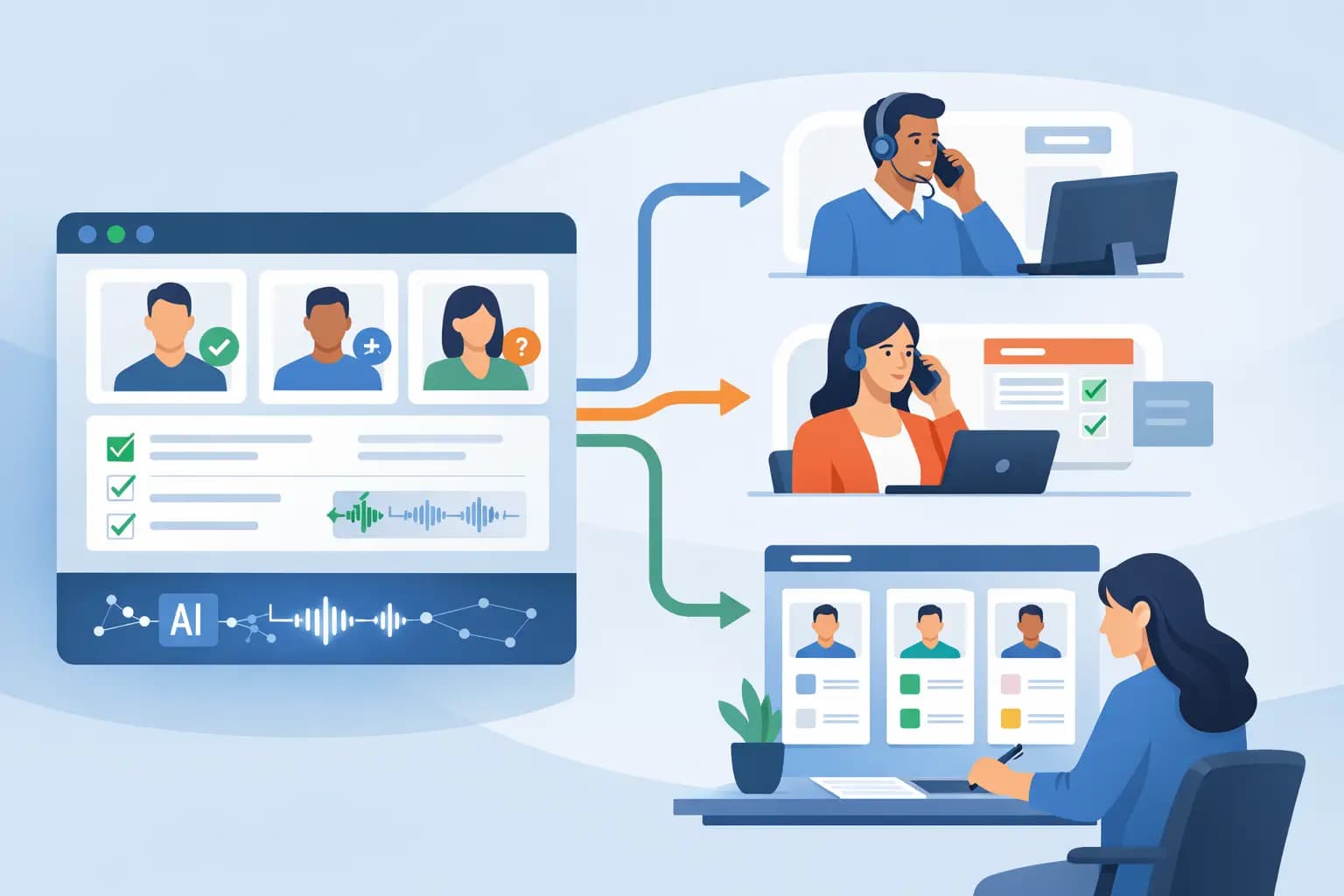
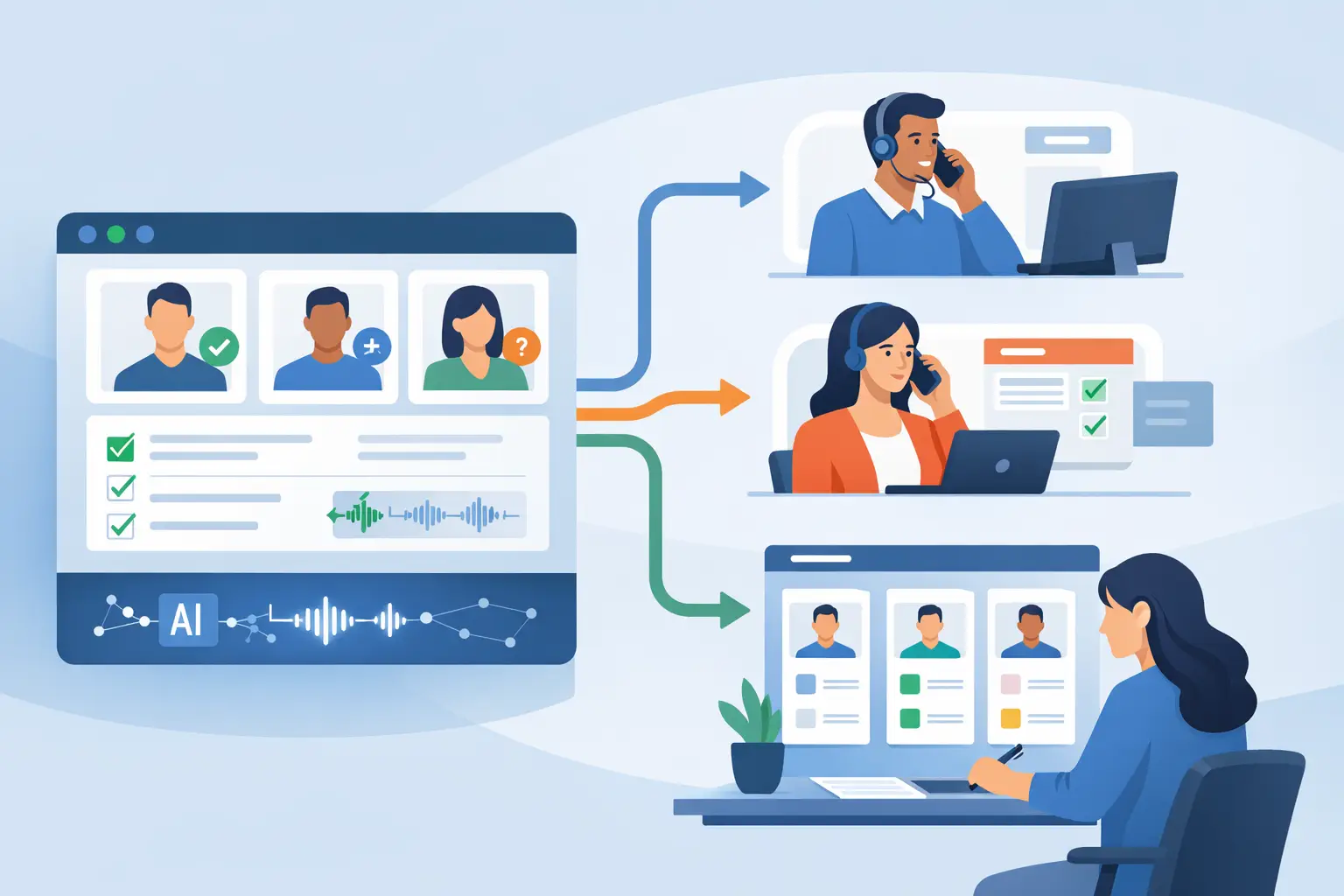
In practical terms, effective call routing after qualification often includes three layers. First, the system classifies the outcome based on captured fields and call signals. Second, it assigns the next owner or queue based on business rules. Third, it attaches the context needed for that person to act without redoing the conversation.
That context matters more than many teams realise. A route without a useful summary is only a transfer. A route with transcript access, structured fields, key buying signals, objections and recommended next steps is a workable handoff.
Where businesses get the routing logic wrong
One common mistake is routing only by geography or availability. That can make sense as a secondary rule, but it should not be the main decision-maker when qualification data is available. The best available rep is not always the right rep.
Another mistake is treating routing as binary: qualified or unqualified. Real call outcomes are usually more nuanced than that. Some leads are ready now. Some need human review. Some are missing one key detail. Some are genuine opportunities but not for the first team that answered. If the workflow only supports yes or no, it will misroute a lot of workable conversations.
There is also a risk in trying to automate every edge case from day one. Overbuilt routing trees can be hard to maintain and harder to trust. A controlled rollout is usually better. Start with the highest-volume and highest-value scenarios, then add refinements once the team can see where calls are landing and whether those outcomes are useful.
Human oversight still matters
Automation should reduce delay and improve consistency, not remove judgement from situations that still need it. That is especially true when lead quality is mixed, when compliance checks are relevant, or when customer intent is not fully clear.
Some outcomes should go straight to action. Others should go to review. That is not a weakness in the system. It is a sensible control point.
For example, a workflow might send clear appointment-ready leads directly into a booking path, while routing ambiguous or high-value conversations into a manager review queue. The goal is not to force every call into full automation. The goal is to avoid wasting human effort on the simple cases while keeping visibility over the sensitive ones.
This is why controlled platforms tend to outperform black-box calling tools in serious business use. Teams need to see what was asked, what was captured, why the call received a certain outcome and when a human should step in. Without that visibility, routing errors become harder to detect and harder to fix.
How to improve routing without rebuilding your whole stack
Most teams do not need a major systems project to improve handoffs. They need better operational rules.
Start by reviewing the calls that create the most follow-up friction. Look for leads that were qualified but sat too long, went to the wrong person or needed the customer to repeat themselves. Those examples usually reveal where routing rules are missing or too broad.
Then define a small set of outcome categories that actually match how your team works. Not twenty. Usually five to eight is enough to separate immediate action, booked follow-up, nurture, review and not-fit outcomes. If the categories are practical, reporting and accountability improve as well.
Next, make sure each route carries enough context to be useful. A destination without notes, call summary, captured fields and reason for routing is still going to create manual cleanup. If your process depends on someone listening back to every recording before acting, the routing layer is not doing enough work.
Finally, test before scaling. Run sample calls through the workflow, inspect the outputs and pressure-test the edge cases. A platform such as DialoGrove is valuable here because it supports structured playbooks, reviewable logic and post-call outputs that make routing decisions visible rather than hidden.
The real value is not speed alone
Faster movement matters, but speed by itself is not the win. Poorly routed speed just sends problems downstream faster. The real value of call routing after qualification is that it turns a conversation into an operational decision with clear ownership.
That changes how teams work. Sales gets better prioritisation. Operations gets cleaner queues. Service teams get context before they call back. Managers get clearer reporting on where leads are going and why. Customers get a more consistent experience because they are not starting from scratch each time.
If your team already invests in calling, qualifying and following up, the handoff deserves the same attention. A qualified conversation should not end as a vague note and a hope that someone picks it up. It should become a clear next step, assigned with context, while the signal is still fresh.