What Is Conversation Routing in Sales?
How conversation routing directs phone calls to the right path based on intent, context, and workflow state for better follow-up and handoffs.
A lead calls back after seeing your ad. Another replies to an old enquiry. A third wants to book, but only if someone can answer a specific question now. If all three land in the same queue with the same follow-up, you do not have a lead problem. You have a routing problem.
So, what is conversation routing?
In practical terms, conversation routing is the process of directing a phone conversation to the right path based on what the caller says, what the business already knows about them, and what should happen next. That path might mean booking an appointment, sending the lead to a sales rep, collecting missing qualification details, escalating to a specialist, handing off to another AI agent, flagging the call for review, or pausing follow-up because the person is not a fit.
For teams that rely on phone conversations to qualify, convert and reactivate leads, conversation routing sits right in the middle of speed and control. It is not just about getting someone on the phone quickly. It is about making sure the conversation produces a useful outcome and moves to the right next step.
That is the part many sales workflows miss.
What conversation routing actually does
At its core, conversation routing decides where a conversation goes next.
That sounds simple, but in most businesses the decision is not based on one factor. A caller might be routed differently depending on whether they are a new lead or an existing contact, whether they are ready to move now or still researching, whether they meet qualification criteria, whether they need a specialist, or whether the conversation should continue in another workflow.
In older phone systems, routing usually meant pushing calls to a department or extension. Press 1 for sales, press 2 for support. That still has a place, but it is limited. It assumes the caller knows where they belong and that every enquiry in a category deserves the same treatment.
Modern conversation routing is more useful because it can respond to intent, context and workflow state.
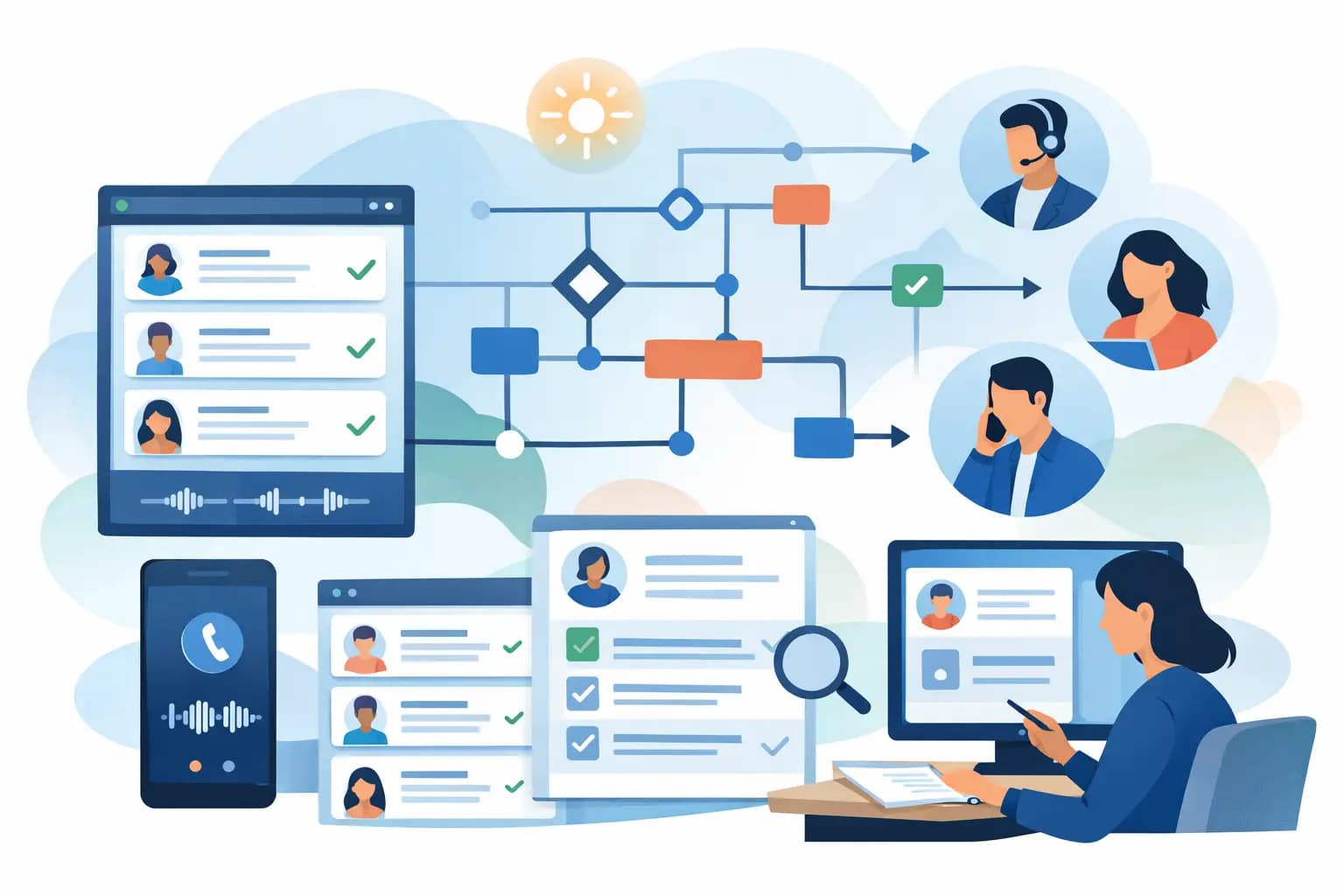
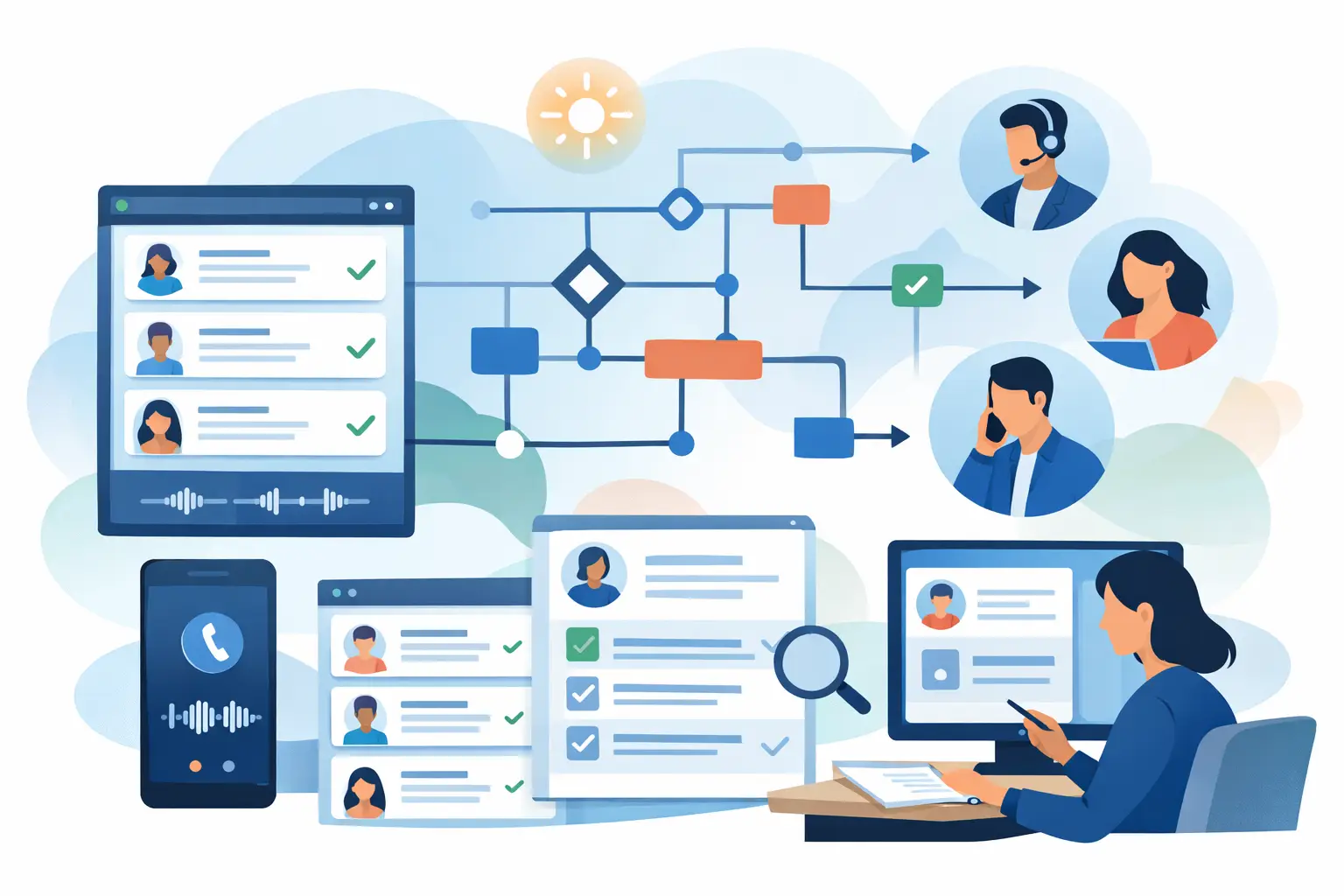
Instead of sorting people by a phone menu alone, it sorts them by what is happening in the conversation. If someone says they are ready to book this week, that should trigger a different next step from someone comparing options for later in the year. If someone needs information that belongs to a different specialist workflow, the conversation should not simply stop with a vague note. It should continue in the right place, with context carried forward.
That is where AI voice workflows can become more useful than basic call routing. The system can listen for intent, capture structured fields, assign an outcome and decide whether the caller should be booked, reviewed, routed, handed off, or followed up later.
Why conversation routing matters more than most teams realise
A lot of follow-up issues look like staffing issues, when they are really routing issues.
Sales reps complain that they are wasting time on weak leads. Service teams get calls that should have gone somewhere else. Managers open the CRM and see notes like "interested" or "call back later" with no clear next action. Customers repeat the same information to multiple people because the first conversation was not captured in a useful way.
None of that is fixed by making more calls alone.
Good conversation routing helps businesses make better decisions while the lead is still engaged. It can reduce lag between first contact and next step. It can improve consistency in qualification. It can also stop high-intent leads from getting buried under low-priority follow-up.
There is an operational benefit too. When routing is designed properly, calls stop being isolated events and start feeding a structured workflow. The business captures the reason for the call, the outcome, key fields, buying signals, review flags and what should happen next.
That gives teams something they can actually work with.
For example, a real estate team might route a buyer enquiry differently depending on budget, preferred suburb, buying timeframe and finance position. A mortgage business might route based on borrowing intent, timeframe, property stage and whether the person needs a broker conversation. A service business might route based on urgency, location, job type and availability.
The industry changes. The pattern stays similar.
The conversation should lead somewhere useful.
What is conversation routing in an AI workflow?
In an AI-assisted calling workflow, conversation routing usually happens once the agent has gathered enough information to make a decision.
For example, an AI voice agent might ask why the person enquired, whether they are looking to act soon, what they are trying to achieve, whether they have spoken to the business before, or whether they meet certain qualification criteria. Based on those answers, the workflow can assign an outcome. That outcome then determines the next action.
The next action might be straightforward:
- book an appointment
- assign the lead to a sales rep
- trigger a follow-up task
- place the lead into a nurture path
- mark the record for human review
- stop the sequence because the contact is not suitable or does not want further contact
But AI conversation routing can also be more flexible than a single call script.
In DialoGrove, the routing logic is designed around agents, playbooks, structured outcomes, review points and handoff paths. That means the workflow can be configured to decide not only what to ask, but also what should happen if the conversation moves outside the first agent's purpose.
For example, a buyer qualification agent may handle the first part of the conversation. If the caller shifts into a vendor appraisal question, a finance-related question, or a booking path, the workflow can be configured to continue the conversation through the right handoff path instead of forcing the first agent to handle everything.
That is important because one giant AI agent is rarely the best experience. Focused agents with clear responsibilities and controlled handoff rules are easier to design, easier to test and easier for teams to trust.
Conversation continuation and handoff
One of the most useful parts of conversation routing is what happens when the first path is no longer the right path.
Some systems treat that as an endpoint. They capture a note and ask a human to follow up later. That can work, but it also creates delay. In many cases, the better experience is conversation continuation.
Conversation continuation means the caller does not have to start again from scratch. The workflow carries forward the context already captured and continues through the next appropriate path.
That might look like:
- a buyer enquiry moving into appointment booking
- a general property enquiry moving into a specialist real estate playbook
- a lead qualification call moving into a human review queue
- an inbound enquiry moving into a callback workflow
- a sales conversation moving into a knowledge-backed answer path
- an initial call moving into a live handoff when human judgement is needed
In DialoGrove, handoff behaviour is configurable at the agent configuration level. A team can decide which agent or workflow should handle which scenario, when the handoff should happen, and whether the customer should experience that transition as a smooth continuation or a clear transfer.
That distinction matters.
Some handoffs should be silent because the caller should feel like one conversation is simply continuing. Others should be announced because transparency builds trust, especially when a conversation moves to a human, a specialist, or a more sensitive topic.
Good conversation routing is not only about where the call goes. It is about whether the caller feels understood and whether the next person or workflow has enough context to act.
The difference between routing calls and routing conversations
Call routing and conversation routing are related, but they are not the same thing.
Call routing is mostly about destination. It answers the question:
Where should this call go?
Conversation routing answers a broader question:
What should happen as a result of this conversation?
That difference matters.
A lead may not need to be transferred live to the right person immediately. They may need qualification first. They may need missing details captured. They may need to be placed into a reactivation workflow. They may need to be marked as urgent because they mentioned a short timeframe. Or they may need human review because the conversation did not fit a clear pattern.
In other words, conversation routing is less about phone infrastructure and more about business logic.
This is why DialoGrove is built around playbooks rather than only prompts. A prompt can make an agent speak. A playbook defines the workflow behind the conversation: what should be asked, what should be captured, what outcome should be assigned, when handoff should happen, and what next action should be created.
That is the difference between an AI call that sounds impressive and an AI call that helps the business operate better.
How effective conversation routing works
The best routing setups are built around outcomes, not just scripts.
That means starting with the decisions your team needs to make. What counts as a qualified lead? Which buying signals matter? Which scenarios should go straight to a person? What should happen when someone is interested but not ready? Which calls need review before any next step is triggered?
Once those decisions are clear, the conversation can be designed to collect the right inputs. Not every call needs a long qualification sequence. Not every lead needs the same questions. A reactivation campaign will route differently from an inbound enquiry, and a service follow-up will route differently again.
This is why ready-made playbooks often work better than open-ended prompting. They force the routing logic to be explicit. Teams can test drafts, refine edge cases and keep the workflow aligned with actual operations rather than hoping the AI improvises well enough.
In a workflow-led system, the routing model should be visible. Teams should be able to understand:
- what the agent is trying to achieve
- what information it must capture
- what structured fields are produced
- what outcomes are possible
- when a human should review the call
- when the conversation should continue through another path
- what integrations or next actions may be triggered
Without that visibility, AI routing becomes hard to trust. With it, managers can inspect the process, improve the playbook and understand why calls are landing where they are.
Common routing criteria businesses use
Most teams route conversations using a mix of timing, intent, fit and risk.
Timing covers urgency. Is this person looking to act now, this month, or later on?
Intent covers what they are trying to do. Are they trying to book, ask a question, compare options, reactivate an old enquiry, or speak to a person?
Fit covers whether they meet the business's criteria for moving forward.
Risk covers situations where the call should be reviewed, paused or handled by a human because the context is unclear, sensitive or outside the workflow.
The right criteria depend on the workflow.
A real estate team might care about property interest, preferred suburb, budget range, buying timeframe, finance position and whether the caller is also considering selling.
A mortgage team might focus on borrowing intent, refinance interest, purchase stage, timeframe, missing documents and whether the conversation needs a licensed broker.
An appointment-led service business might prioritise service need, location, urgency, availability and booking intent.
The principle stays the same: route based on information that changes what the team should do next.
Where conversation routing breaks down
The biggest mistake is treating every lead the same.
If your workflow asks the same questions in the same order and sends every result to the same place, you are not really routing. You are just collecting generic notes.
Another problem is over-automation. Not every conversation can or should be resolved automatically. Some calls are messy. Some contain mixed signals. Some need empathy, judgement or clarification that a structured workflow cannot provide on its own.
Good routing does not try to avoid humans. It decides when human involvement adds value.
There is also a data problem. Routing is only useful if the outcome is captured clearly. If the system says a lead is qualified but no one can see why, trust drops quickly. Teams need recordings, transcripts, summaries, captured fields, outcome labels, review flags and next actions that make sense at a glance.
This is also where conversation continuation matters. If a call moves into another path, the next workflow should not lose the context already captured. Otherwise the customer has to repeat themselves and the team loses confidence in the process.
What good conversation routing looks like in practice
A strong conversation routing setup is easy to understand from both sides: the business and the person on the call.
For the business, it means every workflow has clear rules, visible outputs and a defined next step. Teams know why a lead was marked a certain way. Managers can review call outcomes without digging through messy notes. Operations can spot bottlenecks and improve the process over time.
For the caller, it means the interaction feels relevant. They are not pushed through unnecessary questions or left hanging without an outcome. If they need a person, they are flagged accordingly. If they are ready to move, the next step is obvious. If the conversation needs to continue through another agent or workflow, the context should move with them.
In DialoGrove, this is the point of combining AI voice agents with configurable playbooks, handoff behaviour, structured outputs and reviewable workflows. The aim is not to automate phone calls for the sake of it. It is to make each conversation lead somewhere useful, with enough structure for the team to trust what happened.
That might mean a real estate buyer lead is qualified and routed to the right consultant. It might mean an open home attendee is marked for callback. It might mean a mortgage enquiry is captured and held for broker review. It might mean a service enquiry is booked, paused or escalated depending on fit and urgency.
The common thread is simple.
The call should not end as a vague note.
It should become a clear operational decision.
How DialoGrove supports conversation routing
DialoGrove is built to make AI voice workflows more controlled, reviewable and operationally useful.
Conversation routing in DialoGrove can be shaped through:
- Agent configuration, where teams define an agent's role, boundaries, handoff behaviour and workflow responsibilities.
- Playbooks, which structure the conversation around a specific business scenario such as buyer qualification, open home follow-up, inbound enquiry handling, appointment booking or lead reactivation.
- Structured outputs, which turn calls into captured fields, summaries, outcomes, review flags and next actions.
- Conversation continuation and handoff, where a workflow can move to another agent, specialist path or human review point with context preserved.
- Review queues, so uncertain, sensitive or high-value calls can be checked before the next step is taken.
- Integrations, where supported workflows can connect call outcomes to CRM, calendar or operational systems.
- Auditability, so teams can see what the agent was meant to do, what happened on the call, what was captured and what happened next.
This matters because serious businesses do not just need AI to talk. They need AI to follow a process.
The more your calls affect pipeline quality, customer experience and team accountability, the more important that routing layer becomes.
A practical way to assess your own routing
If you are trying to improve your sales follow-up process, start with a few practical questions.
Can your team explain why a lead was routed to a specific next step?
Are your qualification questions tied to real business decisions?
Do high-intent leads move faster than low-priority ones?
Can a conversation continue into another workflow without the customer starting again?
Do your reps receive structured context or just vague notes?
Can managers inspect outcomes without listening to every call?
Is there a clear point where a human reviews uncertain or sensitive cases?
If the answer to those questions is unclear, the problem may not be the number of calls your team is making. It may be what happens after those calls begin.
Conversation routing is the difference between making contact and creating momentum.
If your follow-up process still produces delays, weak notes or too many leads sitting in limbo, start by asking a simpler question than "Do we need more calls?"
Ask whether each conversation is being routed to the right next step at the right time.
That is where better sales workflows usually begin.