Human Review Queue for AI Calls Explained
How a human review queue for AI calls improves quality, control and follow-up with clear triggers, workflows and safer lead handling.
Learn how a human review queue for AI calls improves quality, control and follow-up, with clear triggers, workflows and safer lead handling.
When an AI voice agent marks a lead as qualified, books a callback, or flags a buying signal, the next question is simple: who checks it, and when? That is where a human review queue for AI calls stops being a nice extra and becomes part of the operating model. If your team relies on phone conversations to move leads forward, review is what turns automation from risky to usable.
For sales and service teams, the problem is rarely just call volume. It is what happens after the call. Notes are patchy, outcomes vary from one rep to the next, and urgent follow-up gets buried beside low-value activity. AI can help by handling first contact and capturing structured information, but without a clear review layer, teams can still end up with messy handovers and poor decisions.
What a human review queue for AI calls actually does
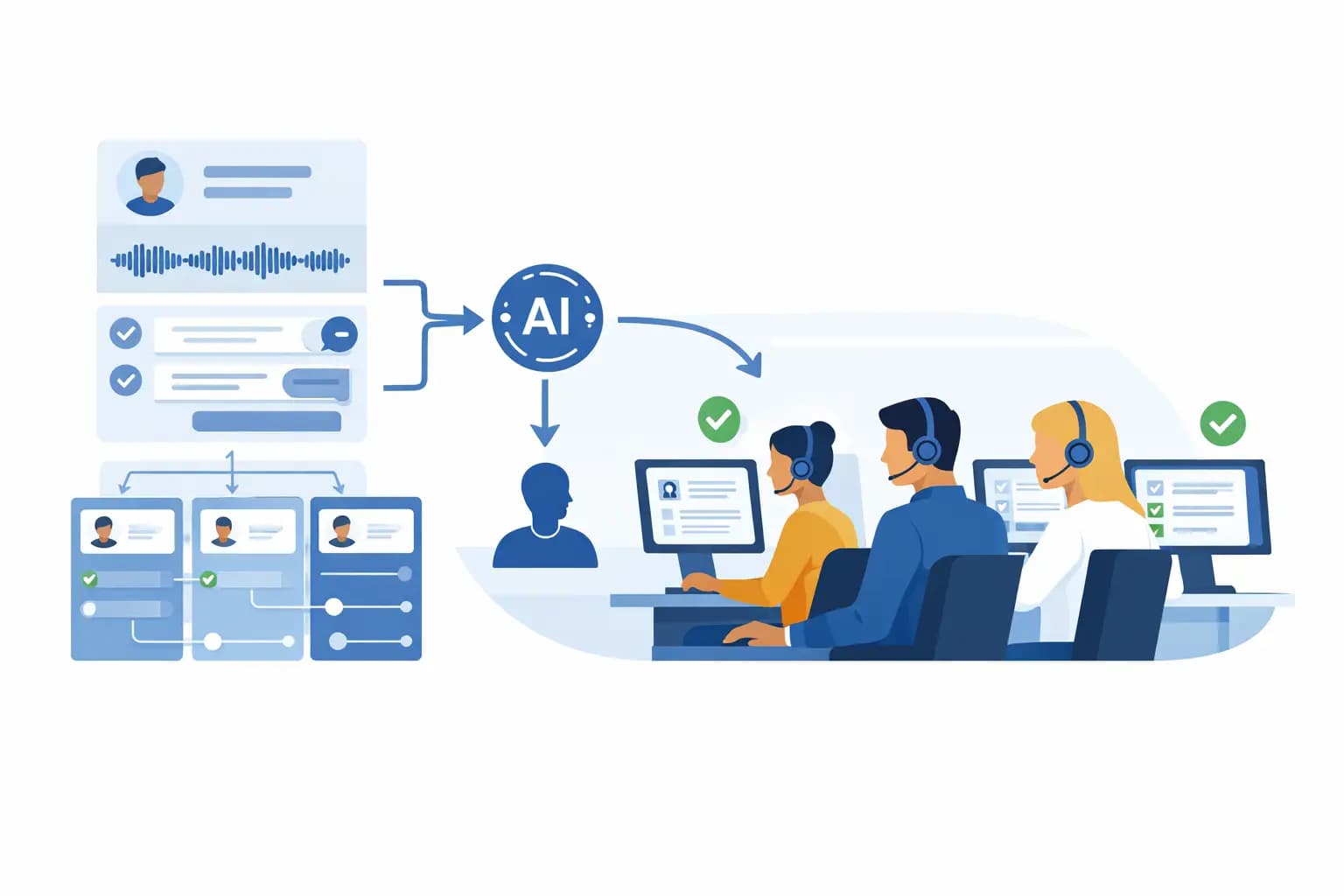
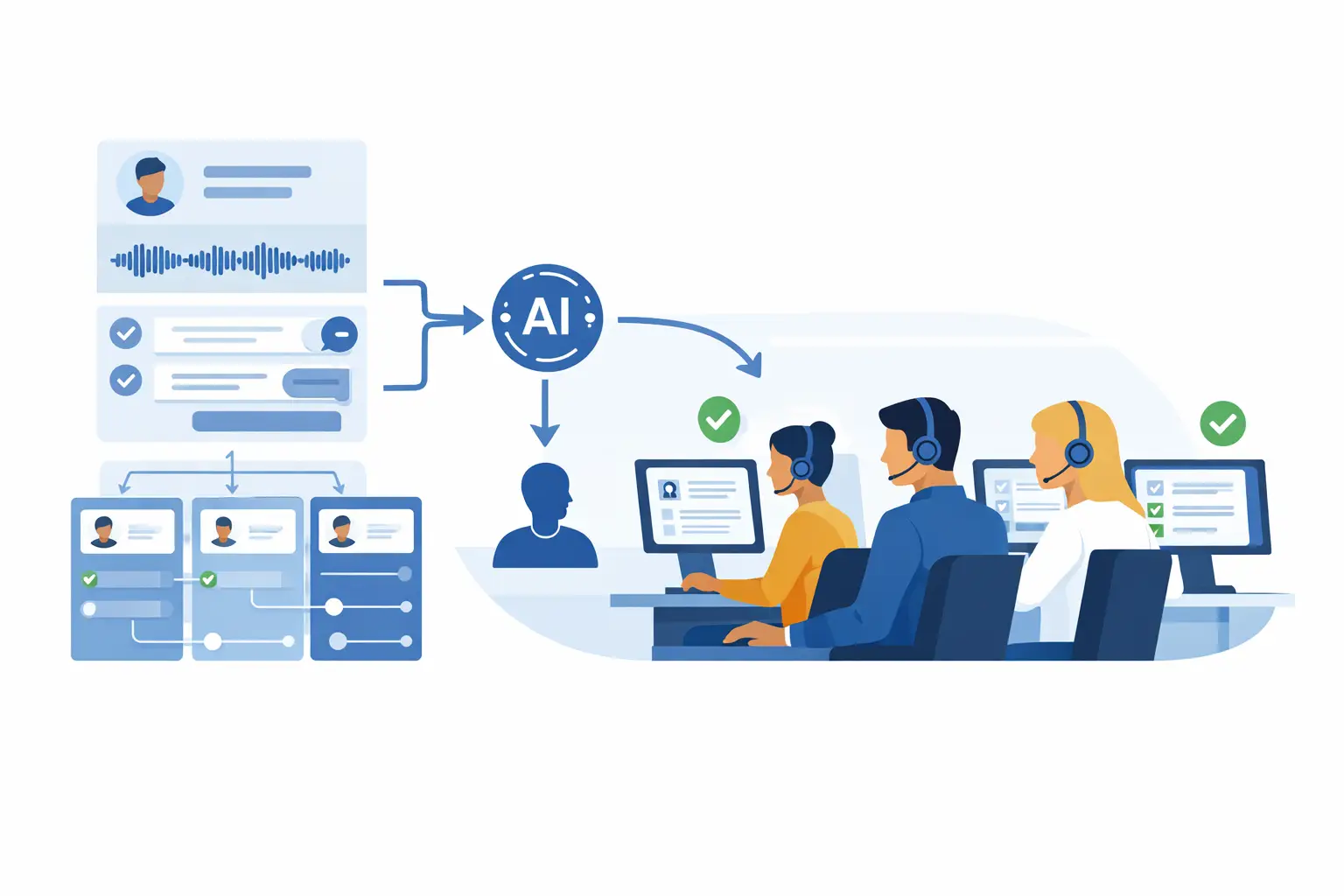
A review queue is not there to second-guess every conversation. It is there to route the right calls, transcripts, and outcomes to a human when judgement matters. That might mean checking whether a lead is genuinely sales-ready, confirming that the AI captured the right contact details, or reviewing a conversation where the caller asked an unexpected question.
The key point is selectivity. If every call needs manual review, you have recreated the same bottleneck you were trying to remove. If no calls need review, you are trusting automation too early. A useful queue sits in the middle. It sends clear-cut outcomes forward automatically and holds back edge cases, exceptions, and higher-risk interactions for someone on the team to assess.
This matters most in workflows where timing and consistency affect revenue. Think of an inbound enquiry that needs a fast response but still requires qualification before a rep spends time on it. Or a reactivation list where some contacts are warm and some are clearly not. The AI can do the early work, but human review decides where confidence is high enough to move fast and where a closer look is worth it.
Why teams struggle without one
Most teams already know what poor follow-up looks like. A lead asks for a call after 3 pm, but the note never makes it into the CRM. An agent detects interest in finance options, but nobody sees that signal until two days later. A contact sounds hesitant, yet the outcome is marked as not interested because the script did not quite fit the conversation.
Without a review queue, these problems tend to show up in two ways. The first is over-automation. Too many decisions are accepted as final, even when the conversation was unclear. The second is over-caution. Teams lose trust in the system and listen to everything manually, which slows response times and defeats the point of using AI calls in the first place.
A proper queue gives people a controlled place to review exceptions. Instead of scanning recordings at random or relying on vague CRM notes, they can see which calls need attention, why they were flagged, and what action should happen next.
The best review queues are trigger-based
The strongest setups do not send calls to review because someone has a vague feeling that AI needs watching. They use defined triggers.
A trigger could be operational, such as missing data fields, low-confidence answers, or a failed booking step. It could be commercial, such as a high-intent buying signal, a request for an urgent callback, or a lead matching a valuable segment. It could also be quality-related, where the transcript suggests confusion, interruption, or a conversation that drifted outside the expected workflow.
This is where structure matters. If your AI voice workflow is built around clear stages, questions, fields, and outcomes, review rules become practical. You are not asking staff to make sense of an unstructured call log. You are asking them to check specific exceptions with context already attached.
For example, if a property lead says they want to sell within 30 days but refuses an appointment, that may deserve review because timing is strong even if the booking failed. If an inbound prospect asks a question the agent could not answer cleanly, that might go to a rep with the transcript, recording, and suggested next step already prepared.
What should go into the queue
A human review queue for AI calls works best when it is narrow enough to stay useful and broad enough to protect quality. In practice, teams usually start with four types of items.
The first is exception handling. This includes unclear answers, failed transfers, incomplete fields, duplicate records, or conversations that broke the expected path.
The second is high-value intent. If a lead shows strong readiness, a human should often verify the context quickly so the right follow-up happens without delay.
The third is risk control. That covers situations where a call should be checked before another action is taken, especially if the transcript suggests confusion, sensitivity, or a mismatch between what was said and how the outcome was tagged.
The fourth is workflow improvement. Reviewing a sample of calls helps teams see where scripts, questions, or routing rules need adjustment. The queue is not only for catching problems. It is also one of the best ways to improve the system over time.
Human review queue for AI calls and team trust
Trust is one of the least discussed parts of AI calling, but it affects adoption more than most teams expect. If sales reps think the AI is dumping poor leads into their pipeline, they will ignore it. If managers cannot see why a lead was marked hot, they will question every outcome. If operations teams cannot audit what happened on a call, they will hesitate to scale it.
A review queue fixes some of that because it makes oversight visible. People can see what the agent asked, what the caller said, what fields were captured, and why the call was routed a certain way. That does not mean every decision becomes perfect. It means the system is understandable enough to manage.
This is also why review should not live only in a transcript. Teams need structured outputs alongside the conversation itself. The transcript explains nuance. The captured fields and assigned outcomes make it operational. When both are available, a reviewer can decide quickly instead of replaying the whole call just to work out what happened.
Speed matters, so review cannot become a backlog
There is an obvious trade-off here. More review can improve accuracy, but too much review slows the team down. In lead response, delay has a cost. A queue that sits untouched for hours turns good intent into a stale opportunity.
That is why service levels for review matter. Not every flagged call deserves the same urgency. A hot inbound enquiry should not sit beside a low-priority record update. Teams need simple priority rules so urgent items rise first.
It also helps to assign review ownership properly. If every flagged call goes to one manager, the process will choke. In many businesses, review works better when ownership follows the workflow. Sales leaders check qualification quality, operations staff check data completeness, and service teams review customer experience issues. The queue still sits in one system, but the action path is clear.
How to set one up without creating more admin
The easiest mistake is designing the review process around what feels safe rather than what is workable. Start smaller. Pick one or two workflows where the value of review is obvious, such as inbound qualification or dormant lead reactivation. Define the outcomes the AI can complete automatically, then identify the specific triggers that should push a call into review.
From there, make sure reviewers can act from the queue itself. They should be able to see the call summary, transcript, recording, captured details, and recommended next step in one place. If they need to jump between tools, copy notes manually, or chase context in the CRM, the queue becomes admin rather than control.
It is also worth measuring the right things. The useful questions are not just how many calls were reviewed. Look at how often reviewed calls changed outcome, how quickly high-priority items were handled, and which triggers are producing noise. A healthy queue gets sharper over time. It should not keep growing just because nobody wants to remove a rule.
Platforms like DialoGrove are most effective when review is built into the workflow from the start, not added after teams lose confidence. The review layer should sit alongside transcripts, outcomes, call recordings, and next-step routing so the handover from AI to human feels deliberate, not improvised.
The real goal is better decisions, not more oversight
A human review queue for AI calls is not about proving that humans are still needed. Most teams already know that judgement matters. The real value is deciding where judgement adds the most operational value and building that into the workflow.
Some calls should move straight through. Some should pause for a quick check. Some should trigger immediate follow-up by a person who can handle nuance better than the workflow can. When that logic is clear, AI calling becomes easier to trust because it is no longer asking the business to choose between speed and control.
For the complete booking automation workflow including where review fits, see our guide to automating appointment booking well.
The strongest calling workflows are not fully manual and they are not fully hands-off either. They are designed so that automation does the repeatable work, people step in where context matters, and every call produces a usable next action. That is usually where performance improves - not when teams remove humans, but when they stop using them for the wrong parts of the process.