What Is an Auditable AI Call Workflow?
How an auditable AI call workflow gives your team a clear record of what the agent was meant to do, what happened on the call, and what happened next.
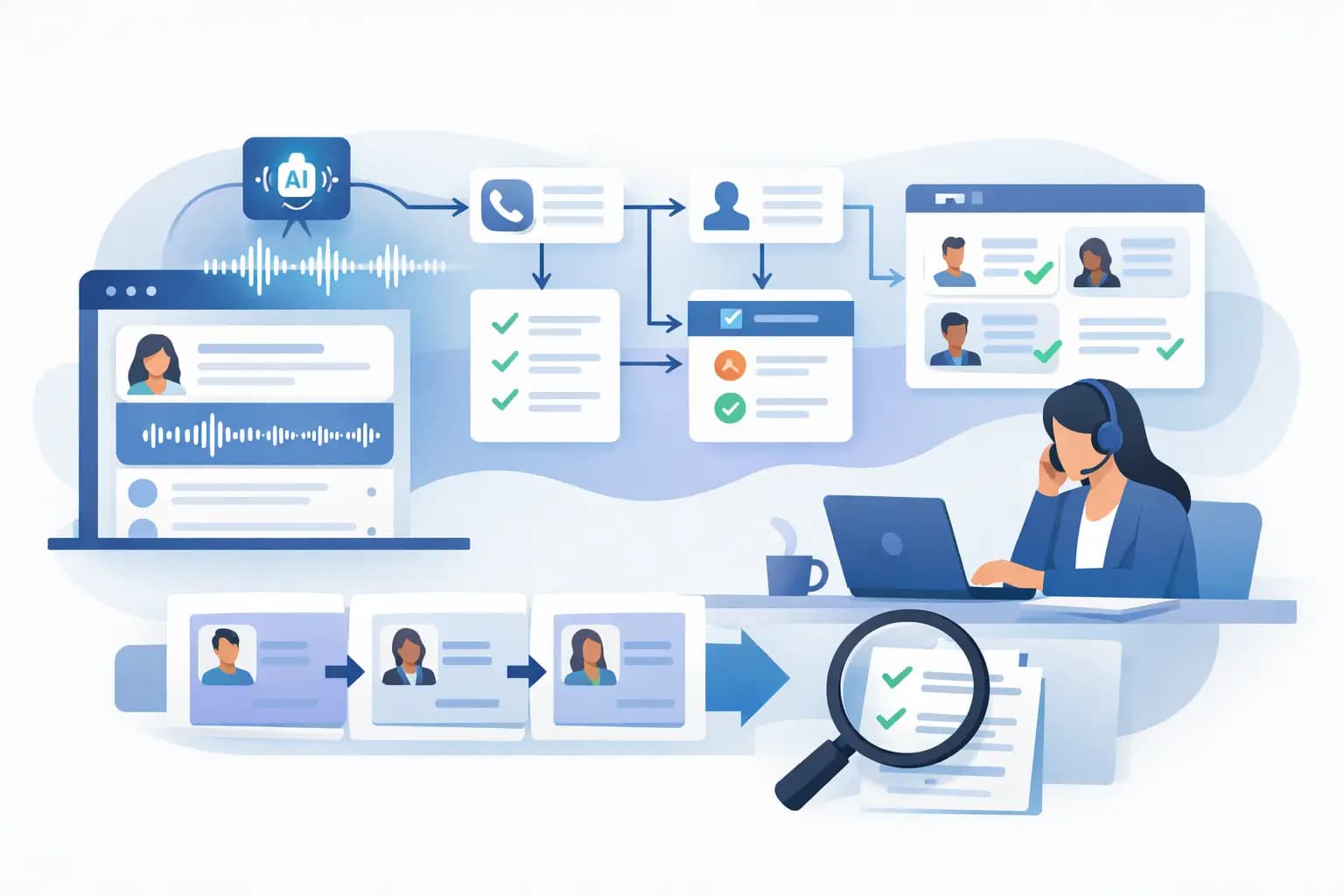
If a lead asks, "Why was I marked unqualified?" or a manager wants to know why one call was escalated and another was closed, you need more than a recording and a vague note in the CRM. An auditable AI call workflow gives your team a clear record of what the agent was meant to do, what happened on the call, what was captured, and what happened next.
That matters because most problems with AI calling are not about voice quality. They come from poor process control. A team launches calls quickly, but no one can see the qualification logic, review the captured fields, check whether the right outcome was assigned, or understand when a human should step in. When that happens, follow-up gets faster, but not necessarily better.
Why an auditable AI call workflow matters
For sales and service teams, phone conversations are rarely the end of the process. They are the start of a decision. Should this lead go to a rep now? Should it be booked, nurtured, reviewed, or paused? Was there buying intent, a compliance flag, or a request not to be contacted again?
If the workflow is not auditable, those decisions become hard to trust. Managers end up checking random calls instead of managing by process. Reps question lead quality because they cannot see how outcomes were assigned. Operations teams spend time cleaning up messy notes, chasing context, and fixing avoidable errors.
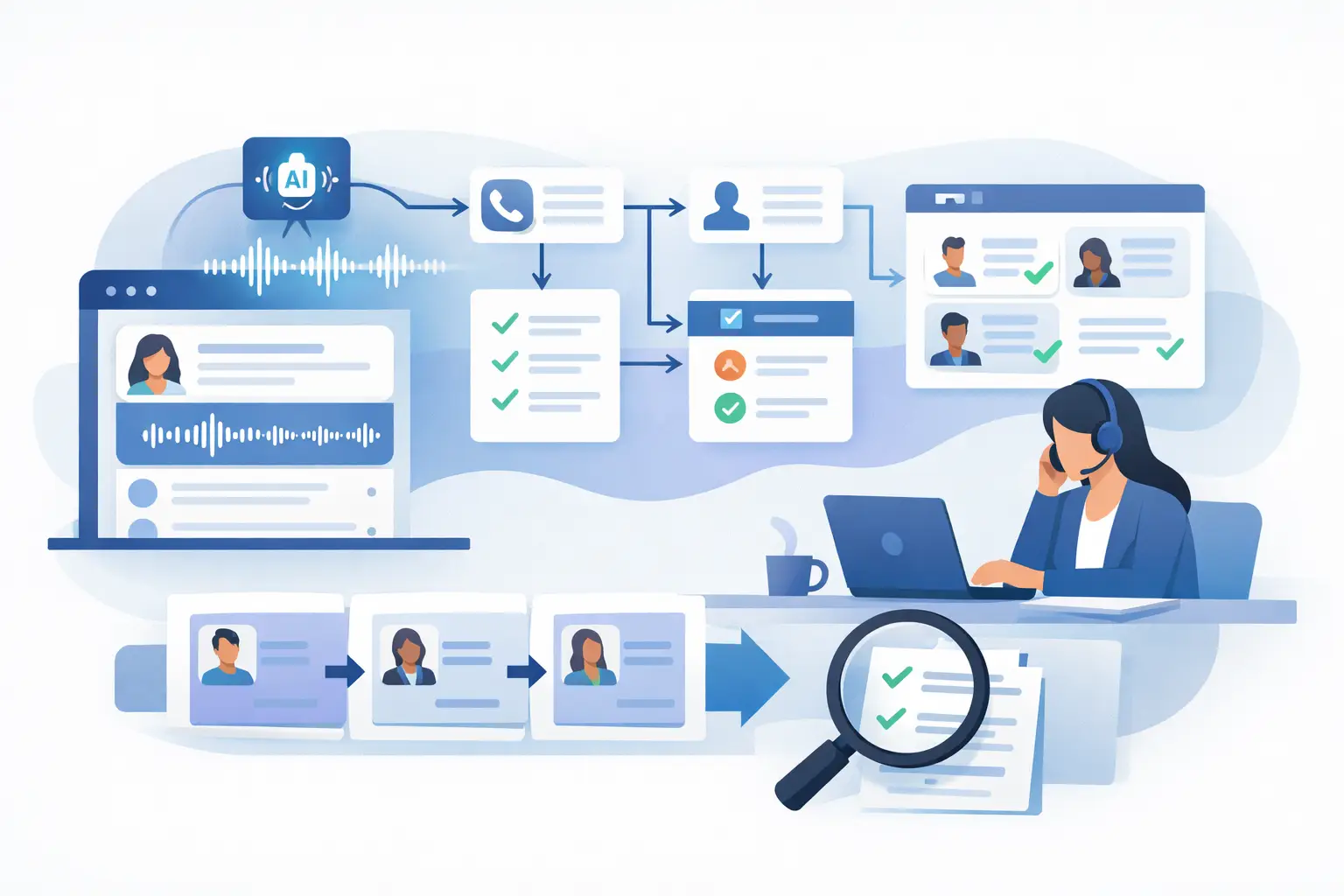
An auditable workflow changes that. It makes the call inspectable, not mysterious. You can see the prompt or playbook behind the conversation, the questions asked, the fields captured, the transcript, the recording, the outcome, and any review triggers. That visibility is what turns AI calling from a risky experiment into something a business can actually run.
What makes a call workflow auditable
Auditability is not just about storing recordings. Plenty of calling systems record calls while still leaving teams in the dark. A genuinely auditable setup ties the conversation to a defined workflow and a set of operational outputs.
The workflow is structured before the first call
The agent should not be improvising from a blank prompt. It should be working through a defined journey such as inbound qualification, buyer reactivation, appointment booking, or post-enquiry follow-up. That means the business can review what the agent is expected to ask, which answers matter, and how the call should end.
This is where many teams make a costly mistake. They focus on what the AI can say, but not what the business needs to capture. If the call is meant to identify urgency, budget range, location preference, or readiness to book, those fields should be part of the workflow from the start.
The outputs are more than a transcript
A transcript is useful, but on its own it does not run an operation. Auditable workflows produce structured outputs such as captured fields, call summaries, disposition outcomes, buying signals, review flags, and recommended next actions.
That structure helps teams move faster after the call. Instead of listening back to understand what happened, a rep or operator can review the key facts, confirm anything that needs a second look, and act. The transcript remains available as evidence and context, but it is not the only source of truth.
Human review is built in where it matters
Not every call needs the same level of oversight. A straightforward appointment confirmation may need minimal review. A qualification call with mixed signals, missing information, or an unusual customer request may need a queue for human checking.
An auditable AI call workflow should make those handoff points explicit. When does the system assign an outcome automatically? When does it hold for review? When does it route to a person? The answer depends on the use case, the stakes, and the quality of the data coming in.
Guardrails are visible
Teams need to know what the agent will and will not do. That includes contact rules, escalation conditions, workflow boundaries, and how edge cases are handled. If a customer asks a question outside the workflow, the safest next step may be to capture the intent and route the case to a human.
Visible guardrails build trust internally. They also reduce the chance that AI starts making decisions your team never intended it to make.
Where auditability helps most in real operations
The strongest use cases are usually the least glamorous ones. Old lead lists, missed web enquiries, after-hours follow-up, dormant prospects, and inconsistent qualification are not exciting problems, but they are expensive.
Take a real estate or mortgage team working through inbound leads. Speed matters, but so does consistency. One rep may ask the right questions every time. Another may skip steps when the day gets busy. An AI voice workflow can help standardise first contact, but only if managers can see the script logic, inspect the call records, and trust the outcomes.
The same applies to service businesses booking consultations or screening enquiries. If the workflow captures the reason for enquiry, preferred timing, service fit, urgency and next step, the team gets a cleaner handover. If the call simply produces a blob of text, someone still has to decode it.
Auditability is especially valuable when businesses are trying to improve conversion without increasing headcount. It lets teams handle more follow-up while keeping a record of process quality. That is very different from treating AI as a black box and hoping it works.
The trade-off: speed versus control
There is a reason some AI calling tools look easy to launch. Less structure means fewer setup decisions. You can get calls moving quickly.
But speed without control creates downstream work. Badly assigned outcomes, missing fields, weak handoffs and unclear exceptions all show up later in sales performance, customer experience, or operational cleanup. What feels faster at launch can become slower in practice.
A more auditable approach usually asks for clearer workflow design upfront. You need to decide what the agent should ask, what counts as a qualified lead, which signals matter, and when a person should review. That takes thought. The payoff is that the results are easier to trust, measure and improve.
For most lead-driven businesses, that is a worthwhile trade. Especially if calls affect revenue, service quality, or customer confidence.
How to assess an auditable AI call workflow
When evaluating a platform or internal process, the key question is simple: can your team explain how a call moved from contact to outcome?
Start with inspectability
A manager should be able to review the workflow logic, listen to the call, read the transcript, and see what fields were captured. If any of those pieces are missing, auditability is weak.
Then look at outcome clarity
Each call should end with a usable result. Not just "completed" but a meaningful operational outcome such as qualified, not interested, needs callback, booked, wrong number, or human review required. Outcomes should map to next actions, not sit as dead-end labels.
Check the review process
Good systems do not assume all calls deserve blind automation. They surface uncertainty. If a lead gives conflicting information, asks for something unusual, or triggers a rule, there should be an obvious place for that call to be checked.
Make sure post-call actions are connected
The audit trail should continue after the conversation. Was a summary saved? Was the lead routed? Was a task created? Was a do-not-contact request respected? Auditability is not just the call itself. It is the chain of action that follows.
This is where workflow-led platforms tend to outperform generic voice tools. They are built to convert conversations into operational outputs, not just audio files.
Better audits lead to better calls
One of the less obvious benefits of auditability is improvement. When the workflow is visible, teams can spot where calls break down. Maybe the qualification questions are too broad. Maybe the agent asks for booking details too early. Maybe too many calls are hitting review because the source data is poor.
Without an audit trail, those issues turn into opinions. With one, they become fixable process problems.
That is why controlled AI calling works best when it is treated like an operational system, not a novelty. The goal is not to make calls sound impressive. The goal is to produce reliable outcomes, cleaner handovers, and faster follow-up with less guesswork.
DialoGrove is built around that principle. The value is not only that calls happen quickly. It is that teams can see what the agent will do, review what happened, and connect each conversation to a clear next action.
For the broader compliance and control framework around AI calling, see our guide to compliant AI lead outreach.
For the broader governance framework around AI systems that continue changing after deployment, see our guide to why APRA says AI is not just another technology risk.
For the broader capability and testing framework from Australia's AI Safety Institute, see our guide to safe AI deployment.
If you rely on phone conversations to qualify, route or reactivate leads, auditability is not an extra feature. It is the difference between automation you can run confidently and automation you spend your time second-guessing. The more your calls affect pipeline quality, customer experience and team accountability, the more that difference shows up where it counts.